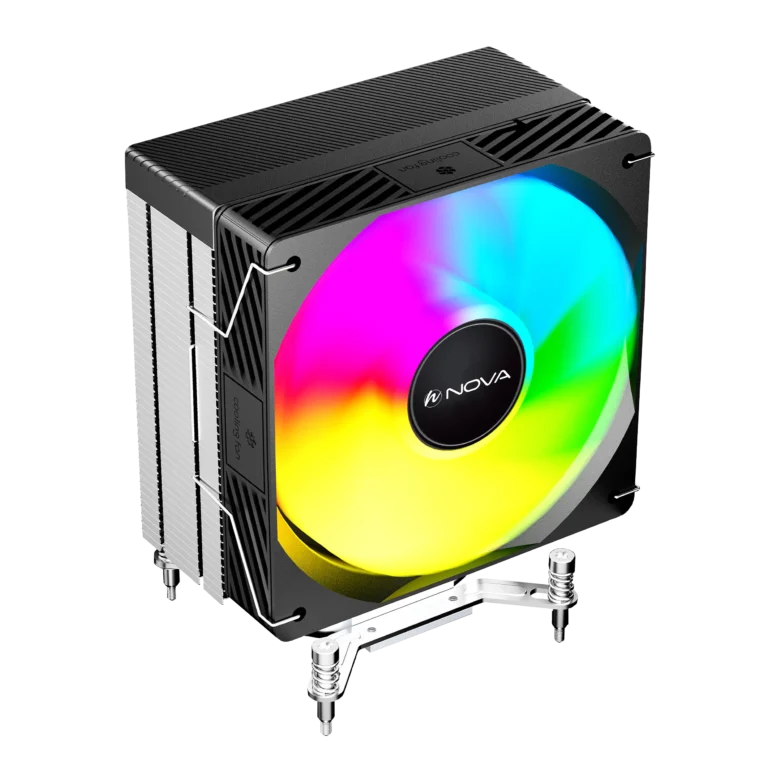
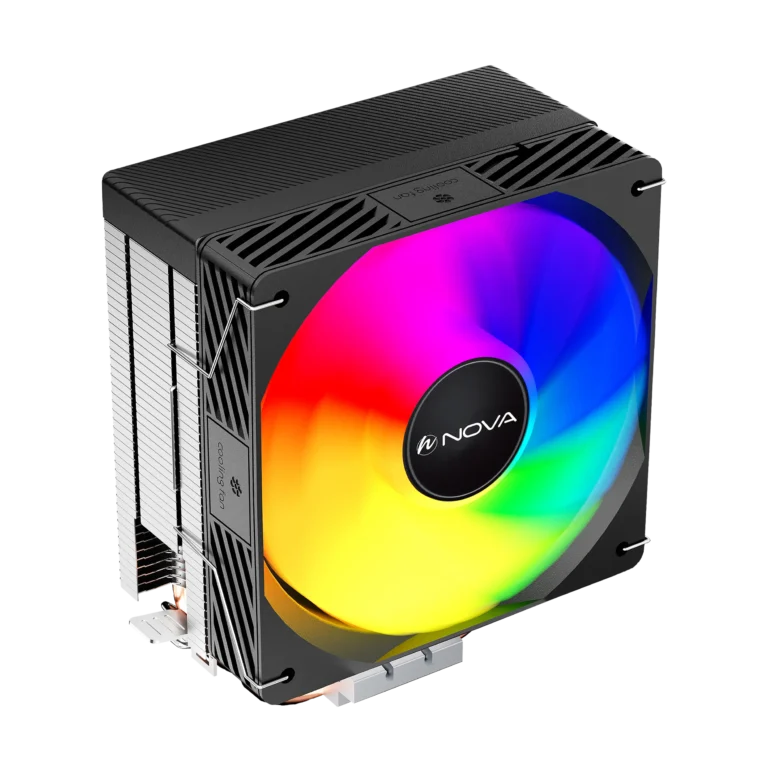
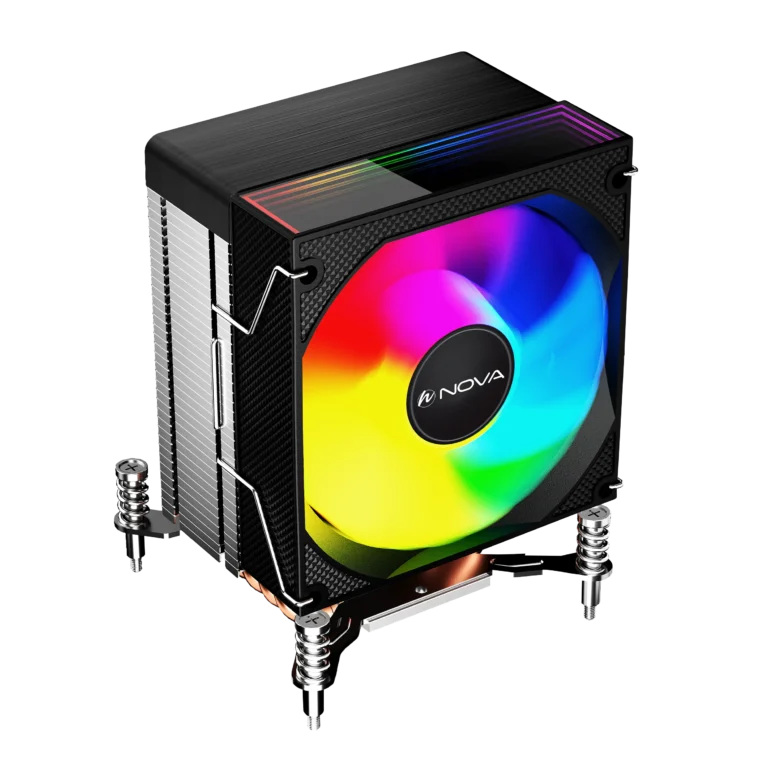
What Is CPU Air Cooling (Air Cooler)
CPU air cooling or Air Cooling is one of the most common methods for controlling CPU temperature in desktop computers. In this system, the heat generated by the processor is transferred to the heat transfer section and heatsink, while the fan creates airflow to dissipate heat from the heatsink surface.
The simple structure, stable performance, and lack of a pump and liquid circuit have made a CPU air cooler a practical solution for a wide range of home, office, gaming, and professional systems.
The performance of air cooling depends on factors such as heatsink design, heat dissipation surface area, heat pipes, fan specifications, the processor’s thermal output, and airflow inside the case.
Why Is Using an Air Cooler for the CPU Important?
The processor generates heat when running software, games, and various workloads. This heat must be properly transferred away from the CPU and dissipated so that the processor can operate under stable conditions.
If the CPU temperature rises excessively, the processor may reduce its operating frequency to control heat, which can affect overall system performance.
Using a suitable CPU cooler helps transfer heat away from the processor surface and dissipate it through the heatsink and airflow.
How Does Air Cooling Work?
In an air cooling system, the heat generated by the CPU is first transferred from the processor surface to the cooler’s contact area. In models equipped with heat pipes, the heat pipes then transfer the heat to different sections of the heatsink.
A heatsink consists of a set of metal fins that provide a large contact area with the airflow. The fan creates airflow to remove the heat accumulated in these fins.
In this way, heat is transferred from the processor to the CPU cooler and then released into the surrounding air.
The Role of the Heatsink in Air Cooling
The heatsink is the main heat dissipation component in an air cooler. Heat from the CPU is transferred to the heatsink surface and distributed across its fins.
The surface area, material, and design of the heatsink can affect its heat transfer and dissipation capacity. Increasing the contact area between the fins and the airflow also helps improve heat dissipation.
The Role of Heat Pipes in Air Cooling
In many air coolers, heat pipes are used to transfer heat from the CPU contact area to different sections of the heatsink.
The number and design of heat pipes are part of the cooler’s overall structure and should be evaluated alongside the heatsink dimensions and fan specifications.
The Role of the CPU Fan in Cooling
The fan is responsible for creating airflow around the heatsink. Fan speed, blade design, airflow volume, and noise level can all affect the cooler’s overall performance.
Some models use a single fan, while more powerful models may use more than one fan.
Benefits of CPU Air Cooling
Air cooling offers several advantages due to its simple structure and reliable performance. Some of the most important features of CPU air cooling include:
Simple structure
Stable performance
Relatively easy installation and maintenance
No pump required
No liquid circuit
Low fan power consumption
Suitable for home and office systems
Suitable for many gaming systems
Variety of sizes and designs
Reasonable cost in many models
Availability of standard and high-performance models suitable for different CPUs
These features have made air coolers one of the common solutions for controlling processor temperature.
Types of CPU Air Coolers
Air coolers can be classified into different groups based on heatsink dimensions, heatsink design, number of fans, and cooling capacity.
Standard Air Cooling
Standard models generally have more compact dimensions and are used for office and home systems as well as processors with conventional thermal output.
These products are a suitable option for users looking for a simple and practical solution for controlling CPU temperature.
High-Performance Air Cooling
More powerful models generally feature larger heatsinks, greater heat dissipation surface area, additional heat pipes, or higher-capacity fans.
These products can be a suitable option for gaming systems and computers where the processor operates under load for extended periods.
What Should You Consider When Choosing an Air Cooler?
Choosing the best CPU air cooler should not be based solely on appearance or the number of fans. The processor’s thermal output, socket compatibility, cooler dimensions, available case space, and fan specifications should all be considered together.
CPU Socket Compatibility
One of the first factors to check when choosing a CPU cooler is whether the product supports the processor socket.
Different Intel and AMD processors use different sockets, and the cooler must be compatible with the platform being used.
Processor Thermal Output
The cooling capacity of the product should match the thermal requirements of the CPU. For processors that operate under heavy workloads, choosing a model with a higher heat dissipation capacity becomes more important.
Therefore, a cooler should not be selected solely based on its size or number of fans.
Cooler Dimensions
Heatsink height is one of the most important factors when choosing an air cooler. A large model may offer suitable cooling capacity, but it may not be possible to install it properly in smaller cases.
The space around the CPU socket, RAM module height, and other motherboard components should also be checked.
Fan Performance and Speed
Fan speed, airflow volume, and blade design affect cooling performance.
Along with cooling capacity, fan noise is also important. For home, office, and gaming systems, it is preferable to choose a product that provides a suitable balance between performance and noise level.
Build Quality and Durability
The quality of the heatsink, heat pipes, fan, bearing, and other cooling components can affect the product’s performance and durability.
A suitable air cooler should be able to maintain stable performance under the intended operating conditions.
What Systems Are CPU Air Coolers Suitable For?
Air coolers can be used in a variety of systems.
In office and home systems, standard models can generally provide the required processor cooling according to its thermal output.
In gaming systems, more powerful models can be used depending on the processor type and workload.
In professional systems, air cooling should also be selected based on the CPU’s thermal output and workload duration. If the processor operates under heavy workloads for extended periods, the cooler’s cooling capacity becomes more important.
Difference Between Air Cooling and Water Cooling
Air and liquid coolers are both used to dissipate processor heat, but they have different structures.
In air cooling, heat is transferred from the processor to the heatsink, while the fan creates airflow to dissipate the heat.
In water cooling, CPU heat is first transferred to the water block and then to the cooling liquid. The liquid carries the heat to the radiator, and the radiator fans are responsible for dissipating it.
Due to its simpler structure and the absence of a pump and liquid circuit, air cooling is a practical solution for many systems. Water cooling can also be a suitable option for certain processors and operating conditions, depending on the system specifications.
The choice between these two cooling methods should be based on the processor’s thermal output, case space, type of use, noise level, and cooling requirements.
For a complete overview of water cooling, its components, radiator types, and selection considerations, see the CPU Liquid Cooling page.
Maintaining a CPU Air Cooler
Dust is one of the factors that can reduce airflow in a cooling system. Dust accumulation on the heatsink fins and fan can reduce airflow and make heat dissipation more difficult.
Periodic cleaning of the fan and heatsink and checking the airflow path inside the case can help maintain cooling performance.
When installing or replacing a cooler, the contact surface between the CPU and cooler should also be properly prepared, and suitable thermal paste should be used.
Proper cooler installation is highly important because even a suitable product cannot deliver its expected performance if it is installed incorrectly.
What Systems Are NOVA Air Coolers Suitable For?
NOVA air coolers are designed for use in different systems and, depending on the product model, can be used in office, home, and gaming systems.
For office and everyday systems, standard models can be selected according to the specifications of the processor being used. In gaming systems or computers where the CPU operates under processing loads for extended periods, choosing models with higher cooling capacity becomes more important.
The product should be selected according to the actual system specifications, taking into account the CPU’s thermal output, processor socket, and available installation space inside the case.
NOVA CPU Air Coolers with K-Sun Service Immediate Replacement Warranty
For purchasing a NOVA CPU air cooler, the appropriate model should be selected based on the processor type, CPU socket, thermal output, available space inside the case, and expected performance level.
NOVA air cooling products are offered with a focus on practical design and stable performance for different types of systems. Users can select a model that matches their computer’s configuration based on their system requirements and processor specifications.
NOVA products come with K-Sun Service’s immediate replacement warranty, allowing users to benefit from immediate replacement services when a covered issue occurs under the warranty terms.
Choosing a suitable air cooler can help control processor temperature more effectively, maintain system stability, and support reliable computer performance during everyday use or extended workloads.