

CPU Liquid Cooling (Water Cooling)
Liquid cooling, or water cooling, is one of the effective methods for transferring and dissipating heat from the CPU. In this system, the cooling liquid absorbs the heat generated by the processor and transfers it to the surrounding environment through the pump, radiator, and fans. Due to its effective temperature control capabilities, water cooling is widely used, particularly in gaming systems and systems designed for heavy workloads.
This type of cooling system is generally available in various models with different radiator sizes and fan configurations, and the appropriate option depends on the type of processor and the requirements of the system. Its integrated design and effective performance have made water cooling one of the common solutions for cooling computer systems.
All NOVA products are manufactured in Iran and come with K-Sun Service’s immediate replacement warranty, giving users confidence in the quality and after-sales support of their products.

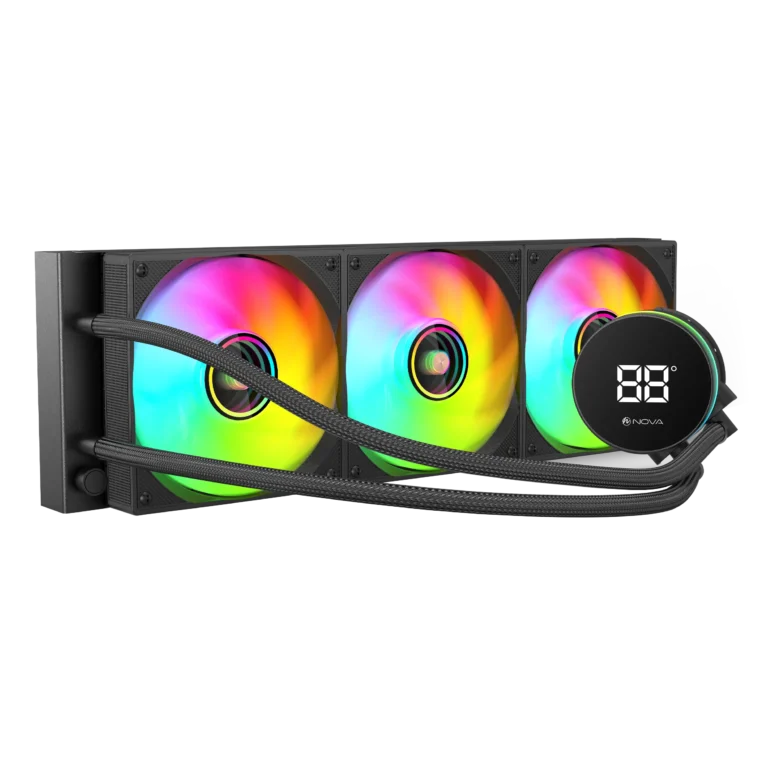
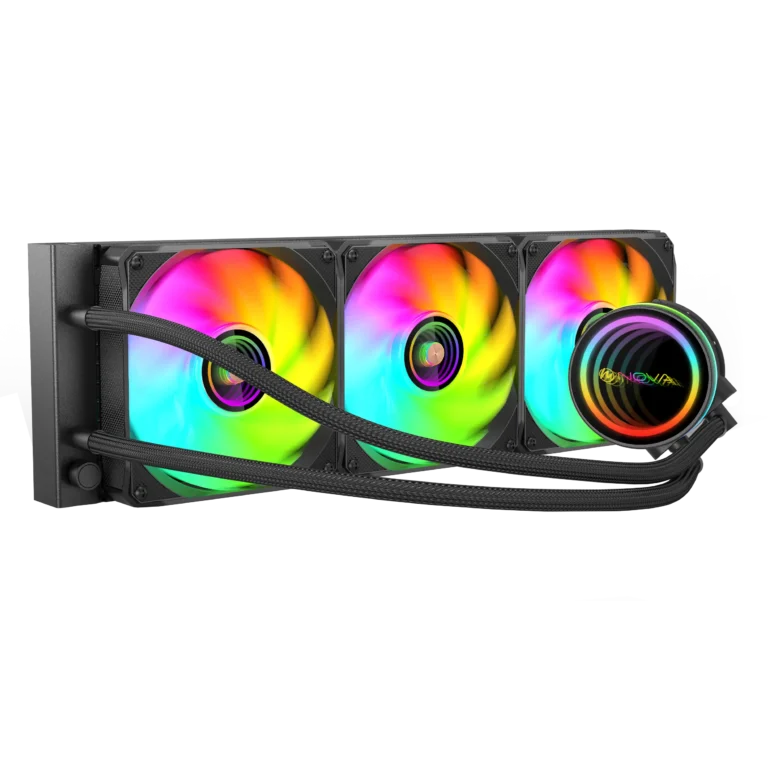
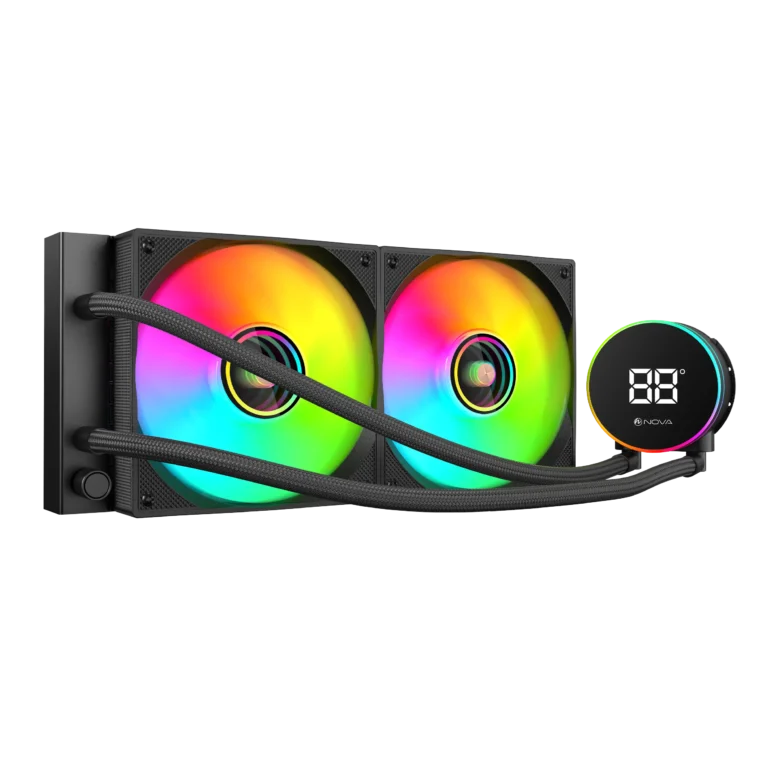
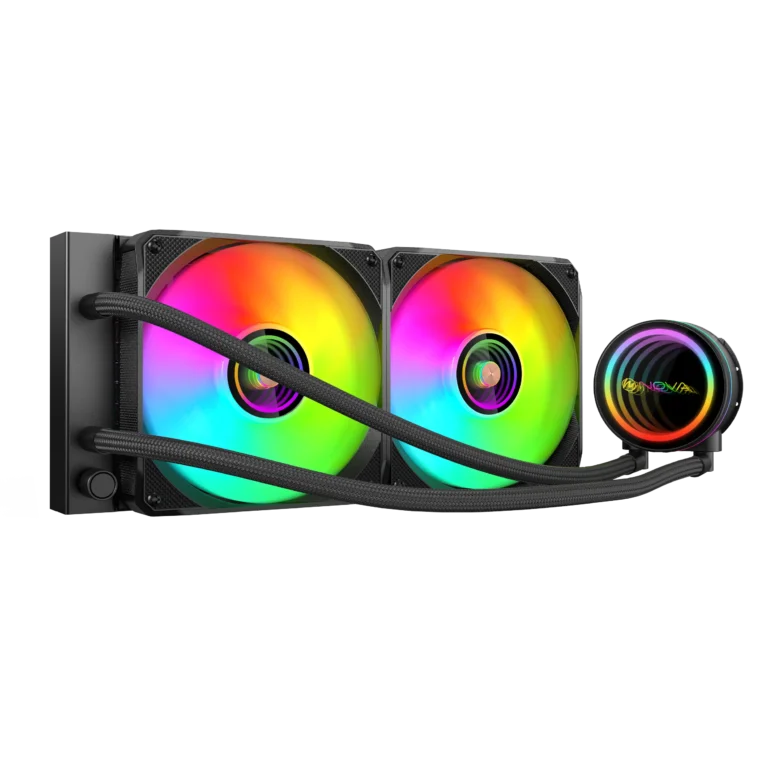
CPU Liquid Cooling (Water Cooling)
CPU liquid cooling or water cooling is one of the solutions used to cool a CPU by using coolant to transfer heat from the processor to a radiator. In this system, the heat generated by the CPU is transferred to the water block, and the liquid circulating through the loop carries this heat toward the radiator. The radiator fans then dissipate the heat through airflow.
This design makes water cooling a relevant option for systems in which the processor operates under significant workloads. However, choosing a CPU liquid cooler should be based on the processor specifications, thermal output, available internal case space, and the intended use of the system.
In the market, these products are also referred to as CPU water coolers, liquid CPU coolers, computer water cooling systems, case water cooling systems, and CPU liquid coolers.
What Is Water Cooling and How Does It Work?
Water cooling uses a cooling loop to transfer heat from the processor to the surrounding environment. The cooling process begins at the surface of the CPU.
The water block is installed on the processor and absorbs heat from the CPU. After absorbing this heat, the liquid circulating through the loop moves toward the radiator. Inside the radiator, the heat is transferred to the metal fins, while the fans move air through the fins to dissipate the heat.
After the liquid temperature is reduced, it continues circulating through the loop and returns to the water block. This cycle continues continuously, allowing heat to be transferred away from the processor on an ongoing basis.
Main Components of a CPU Liquid Cooler
The performance of a water cooling system depends on the coordination of several main components. Each component has a specific role in transferring or dissipating heat.
Water Block
The water block is the part of a liquid cooling system that is installed directly on the processor. It absorbs heat from the CPU and transfers it to the coolant.
Proper contact between the water block and the processor is highly important. Correct installation and the proper application of thermal paste also help improve heat transfer between the CPU and the cooling surface.
Pump
The pump is responsible for circulating the liquid through the loop. After absorbing heat from the processor, the liquid moves toward the radiator and, after the heat is dissipated, returns to the water block.
Proper pump operation is essential for maintaining continuous liquid circulation and the overall efficiency of the cooling system.
Radiator
The radiator is the primary heat dissipation component in a case water cooling system. After passing through the water block, the heated liquid enters the radiator and transfers its heat to the metal fins.
The fans connected to the radiator move air through the fins, allowing heat to be dissipated from the radiator surface.
Radiator size is one of the factors that affects cooling system design. However, a larger radiator alone does not mean that it is suitable for every system. Available installation space and the processor's thermal requirements must also be considered.
Radiator Fans
Radiator fans are responsible for generating airflow to dissipate heat. Rotation speed, blade design, the number of fans, and their overall performance can affect airflow and the level of noise produced.
Different water cooling systems may use one, two, or three fans. For example, many 240 mm models use two 120 mm fans, while many 360 mm models use three 120 mm fans.
Types of Water Cooling
Water cooling systems can be divided into two main categories based on their design: AIO and Custom Loop.
AIO Water Cooling
AIO, or All-in-One, is an integrated liquid cooling solution in which the main components are provided as a ready-to-use system. The water block, pump, tubes, and radiator are integrated into a single unit, eliminating the need for the user to design and assemble the liquid loop separately.
Relatively simple installation, a clean appearance, and a variety of radiator sizes have made AIO water cooling a common option for gaming and professional systems.
Custom Loop Water Cooling
Custom Loop systems offer a customizable design, allowing users to select components such as the water block, radiator, pump, reservoir, and tubing according to the overall system design.
This method is primarily used for professional systems and projects where the ability to customize the cooling loop is important. Compared with AIO systems, designing, installing, and maintaining a Custom Loop is more complex and requires greater technical knowledge.
Types of Water Cooling Based on Radiator Size
One of the most common ways to categorize liquid coolers is by radiator size. 120 mm, 240 mm, and 360 mm models are among the common sizes used in AIO systems.
120 mm Water Cooling
A 120 mm water cooler occupies less space than models with larger radiators and can be considered for cases with limited installation space.
However, this model should be selected based on the processor's thermal output, and the smaller size of the case should not be the sole selection criterion.
240 mm Water Cooling
A 240 mm water cooler is one of the common sizes for gaming and professional systems. These models typically use two 120 mm fans.
The combination of radiator dimensions, surface area, and cooling capacity has made 240 mm models suitable for use in many systems.
360 mm Water Cooling
A 360 mm water cooler, or 360 mm liquid cooler, typically features three 120 mm fans and provides a larger surface area for heat dissipation.
These models can be considered for systems where the processor operates under heavy workloads. However, before choosing one, the radiator mounting location, case dimensions, and available space around the motherboard should be checked.
Benefits of Using a CPU Liquid Cooler
Using water cooling can provide advantages for certain systems. One of the main characteristics of this design is the transfer of heat from the water block to the radiator, where it can be dissipated across a larger surface area.
The benefits of liquid cooling include:
Effective CPU temperature control during intensive workloads
Support for different radiator sizes according to the system configuration
A clean and modern appearance in many models
More open space around the CPU socket compared with some large air coolers
Suitability for gaming and professional systems
Availability of models with RGB or ARGB lighting
However, water cooling is not necessary for every system. If a processor has a low thermal output, using a large liquid cooler may not provide a proportionate benefit relative to its cost and the space it occupies.
What to Consider When Choosing Water Cooling?
CPU Socket Compatibility
Before choosing a CPU water cooler, its compatibility with the CPU socket should be checked. Each product supports a specific range of sockets, and the mounting system must be compatible with the processor and motherboard being used.
Processor Thermal Output
Radiator size alone is not a suitable criterion for selecting a water cooling system. The processor's thermal output and workload should be evaluated alongside the cooler's cooling capacity.
For processors that operate under sustained workloads, selecting an appropriate cooling capacity becomes even more important.
Radiator Size
Before purchasing a case water cooling system, the radiator mounting location and the case's supported dimensions should be checked.
The radiator length, radiator and fan thickness, and the available space around the mounting location must all be compatible with the case design.
Number and Size of Fans
The number and size of radiator fans affect airflow and heat dissipation. Models with two or three fans provide a larger airflow area, but they must be compatible with the available installation space and the system's thermal requirements.
Noise Level
The pump and radiator fans can produce noise during operation. When choosing a water cooling system, the system's noise level should be evaluated alongside cooling performance.
Internal Case Space
The radiator mounting location, space around the motherboard, and tubing routes should be checked before installation. Choosing a product that is technically suitable but does not have enough installation space inside the case will not result in a practical solution.
What Systems Are Suitable for Water Cooling?
A water cooling system can be used in gaming systems, professional systems, and computers designed for long-term intensive workloads.
In gaming systems, demanding games can increase the processor's workload. In professional systems, long-term workloads such as rendering can also generate considerable amounts of heat.
However, water cooling should be selected based on the specific CPU specifications, thermal output, available case space, and intended use. Simply being a gaming or professional system is not sufficient reason to choose a specific model.
Difference Between Water Cooling and Air Cooling
Water cooling and air cooling both perform the same fundamental task of dissipating processor heat, but their heat transfer methods are different.
In liquid cooling, the water block and coolant transfer heat to the radiator, while the radiator fans are responsible for dissipating the heat.
In air cooling, heat is transferred to the heatsink and heat pipes, while the fan directly generates airflow to dissipate the heat.
When choosing between these two methods, CPU specifications, cooling capacity, available case space, noise level, and system usage should be considered.
For a complete overview of the structure and features of air coolers, visit the CPU Air Cooler page.
Is Water Cooling Also Used for Graphics Cards?
The term GPU water cooling or graphics card water cooling refers to systems designed to cool graphics cards. These products differ structurally from CPU liquid coolers and should not be considered identical simply because both use liquid as part of the cooling process.
If the goal is to cool the processor, a product specifically designed for CPUs should be selected, with support for the required socket and platform.
Water Cooling Maintenance
Liquid coolers, particularly AIO models, are designed for long-term use, but keeping the radiator and fans clean remains important.
Dust accumulation on the radiator fins can reduce airflow and affect heat dissipation. The performance of the fans and pump should also be monitored over time.
An unusual increase in CPU temperature, abnormal pump or fan noise, or a noticeable reduction in cooling performance may indicate that the system requires inspection.
Proper radiator and fan installation is also important and should be carried out according to the airflow direction inside the case.
NOVA Liquid Coolers
NOVA liquid coolers are designed for use in different systems, from gaming computers to professional systems.
When choosing a NOVA water cooler, factors such as processor specifications, thermal output, radiator dimensions, number of fans, socket compatibility, and available installation space inside the case should be considered.
For example, when selecting a 240 mm or 360 mm model, users should make sure that sufficient space is available for the radiator and fans before installation.
The goal when choosing a cooler is not to use the largest available model. Instead, the selected model should provide the right balance of cooling capacity, dimensions, compatibility, and noise level for the actual requirements of the system.
NOVA CPU Liquid Coolers with K-Sun Service Immediate Replacement Warranty
NOVA CPU liquid coolers are designed for systems where CPU temperature control and stable processor performance are important.
When choosing a NOVA water cooling system, attention should be paid to processor specifications, radiator dimensions, case compatibility, and the intended use of the system.
NOVA products come with K-Sun Service’s immediate replacement warranty, allowing users to benefit from immediate product replacement services if an issue covered by the warranty occurs.
The right water cooling solution should be selected based on the actual requirements of the system. Radiator size, fan count, or product appearance alone are not sufficient criteria, and compatibility and cooling capacity should remain the priorities.


